Awxlumv 120mm Aluminum Heatsink Review: Specs, Pros and Cons
As an Amazon Associate we earn from qualifying purchases. Links on this page are affiliate links.
This awxlumv large aluminum heatsink 4 72 x2 72 x1 06 review focuses on a passive cooling solution for components that generate moderate heat. The unit is constructed from black anodized aluminum, a material chosen for its balance of thermal conductivity and corrosion resistance. It features a compact footprint with precise dimensions of 120 x 69 x 27mm. The design includes 22 fins to maximize surface area for heat dissipation without requiring any moving parts. This makes it a straightforward option for builders looking to add passive cooling to specific electronic components. The lack of fans ensures silent operation, relying entirely on airflow around the heatsink to manage temperatures effectively.
What stands out
- Black anodized aluminum construction for durability and heat transfer
- 22 fins designed to increase surface area for passive cooling
- Compact dimensions of 120 x 69 x 27mm fit tight spaces
- Versatile compatibility with MOSFETs, NVMe SSDs, and GPU backing plates
Who it fits
Good fit for
This heatsink suits users who need passive cooling for power transistors, voltage regulators, or NVMe SSDs. It is ideal for builds where silence is a priority, as it has no fans to create noise. The compact size makes it suitable for small form factor cases or tight enclosures where larger coolers would not fit. It also works well as a supplementary cooler for components that do not generate excessive heat on their own. If you are cooling a power amplifier or a network device, this unit provides a reliable, low-profile solution.
Who should skip it
You should look at another option if you need active cooling for high-wattage CPUs or GPUs. This unit lacks a fan and heat pipes, which are necessary for moving large amounts of heat quickly. It is not designed for processors that generate significant thermal output under load. Additionally, if you require a cooler with mounting hardware included for standard CPU sockets, this product does not provide that. It is strictly a heatsink fin array, so you must supply your own mounting solution for installation.
Verdict: This is a simple, passive aluminum heatsink best suited for low-to-medium heat components like NVMe drives or power modules. It offers silent operation but cannot replace active coolers for high-performance processors.
Key specs explained for this heatsink
Material: Black anodized aluminum
This specification indicates the heatsink is made from aluminum that has undergone an anodizing process to create a black oxide layer. You benefit from improved corrosion resistance compared to bare metal, which helps the unit last longer in humid environments. The aluminum core provides decent thermal conductivity for passive cooling applications, making it suitable for components like NVMe SSDs or MOSFETs that do not require the extreme heat dissipation of high-end CPU air coolers.
Dimensions: 120 x 69 x 27mm
These measurements define the physical footprint and thickness of the cooling unit. You can use this data to verify clearance within your specific case or device chassis before purchasing. The 27mm height is relatively low, meaning it will fit in compact builds or alongside other components where space is limited. When comparing options, check these dimensions against your available vertical and horizontal space to ensure the heatsink does not interfere with nearby hardware or case walls.
Fin count: 22 pcs
This spec refers to the number of individual fins attached to the base of the heatsink. More fins generally increase the surface area exposed to airflow, allowing for better passive heat dissipation. With 22 fins, this unit offers a moderate surface area expansion. You should consider this when evaluating cooling potential for moderate heat sources. It is a simpler design compared to dense fin stacks found in larger tower coolers, prioritizing airflow efficiency over maximum thermal mass.
Weight: 7.76 ounces
This value tells you how heavy the heatsink is, which is relevant for mounting security and structural support. You need to ensure that the mounting surface, such as an NVMe drive or PCB, can support this weight without bending or failing. For passive cooling applications, a moderate weight like this often correlates with a solid aluminum construction. It is light enough for easy installation but heavy enough to provide some thermal mass to help buffer temperature spikes during short bursts of activity.
Design and build details
The listing describes a single-piece aluminum construction with a black oxide finish. This material choice prioritizes lightweight durability and basic thermal dissipation. You get 22 fins arranged in a dense layout. The dimensions are 120 x 69 x 27mm, or 4.72 x 2.72 x 1.06 inches. This compact form factor fits into tight spaces where larger air coolers would not clear surrounding components. The weight is listed at 7.76 ounces. This modest mass means the unit relies on adequate case airflow rather than heavy thermal mass to manage heat.
The black anodized surface serves both aesthetic and functional purposes. It helps resist corrosion and reduces visual glare inside a computer chassis. According to the listing, this heatsink is designed for passive cooling applications. It is suitable for components like MOSFETs, NVMe SSDs, or GPU backing plates. The design lacks any moving parts, fans, or mounting hardware in the package. You must provide your own thermal interface material and mounting solution. The build is purely structural, relying on direct contact with the heat source. This simplicity makes it a versatile option for custom builds or specific electronic projects where active cooling is unnecessary or undesirable. The straightforward design ensures compatibility with various industrial and consumer electronics setups.
Setup and everyday use guide
Installing this heatsink requires a direct thermal interface between the device and the fin array. The unit measures 120 x 69 x 27mm, or 4.72 x 2.72 x 1.06 inches. You must ensure your component fits within these dimensions. The base is flat aluminum, designed for contact with heat-generating parts. You apply thermal paste to the source, then mount the heatsink. The package includes only the aluminum fin block. You need your own mounting hardware, screws, or adhesive suitable for your specific application.
This passive cooler works with components that produce moderate heat. The listing notes compatibility with MOSFETs, NVMe SSDs, GPUs, and power transistors. It is also suitable for voltage regulators and network devices. The black anodized surface helps dissipate heat into the surrounding air. There are no fans or active cooling elements. You rely on natural convection. Ensure adequate airflow around the 22 fins for best results. If the component generates too much heat, this unit may not be sufficient.
In everyday use, the heatsink remains static. It does not require power or maintenance. The black oxide finish resists corrosion, which is useful in humid environments. The 7.76-ounce weight is light, making it easy to handle during installation. You should check that the heatsink does not interfere with nearby components or the case walls. Proper spacing ensures the air can flow over the fins. This setup is ideal for low-profile builds or external drive enclosures where space is limited.
Before you buy this heatsink
This unit is a passive cooling component, meaning it relies on airflow to dissipate heat. You must ensure your system has adequate air movement across the 22 fins. Without a fan or case airflow, the black anodized aluminum will not cool effectively. Check your component’s thermal output against the heatsink’s surface area. The 120 x 69 x 27mm size fits many MOSFETs, NVMe drives, and small ICs, but you must verify physical clearance in your chassis. You will need thermal paste or adhesive pads to attach it securely. This heatsink suits low-to-moderate heat loads. It does not replace active CPU air coolers for high-performance processors. Use it for auxiliary components like GPU backing plates or power regulators. Keep the fins clean from dust to maintain efficiency. This option is best for niche applications where space is limited and heat generation is controlled.
Check before you buy
- Verify your component fits within the 120 x 69 x 27mm dimensions.
- Ensure your case provides sufficient airflow across the 22 fins.
- Confirm the thermal output of your device matches passive cooling limits.
- Check if you have the necessary thermal paste or adhesive pads.
The product at a glance
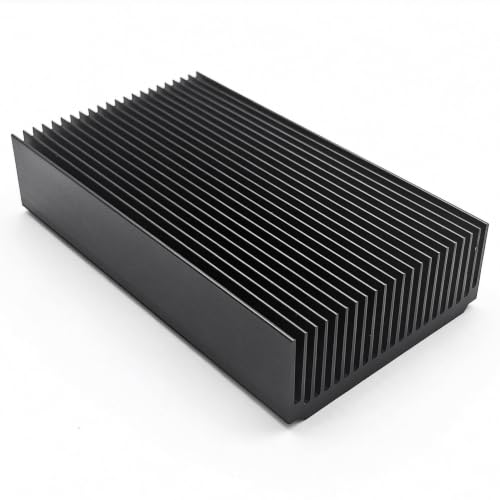
Awxlumv 120mm Aluminum Heatsink
Best for: Passive cooling of MOSFETs and NVMe SSDs
- Material
- Black anodized aluminum
- Compatible Device
- Computer, MOSFET, NVME SSD, GPU
- Dimensions
- 120 x 69 x 27mm
- Weight
- 7.76 ounces
View on Amazon: Awxlumv 120mm Aluminum Heatsink Affiliate link
This Awxlumv heatsink is a black anodized aluminum block measuring 120 x 69 x 27mm. It features 22 fins for surface area. You can use it for computer components, MOSFETs, NVMe SSDs, or GPU backing plates. The unit weighs 7.76 ounces. It is a simple passive cooling solution for various electronic devices.
Pros
- Black anodized aluminum material
- 22 fin design
- 120 x 69 x 27mm dimensions
- Versatile compatibility
Cons
- Passive cooling only
- No included mounting hardware
- Limited to low-power components
Good fit if
- You need a passive cooler for an NVMe SSD
- You are cooling a MOSFET or power transistor
- You want a black anodized aluminum heatsink
Skip if
- You require active fan cooling
- You need high-performance CPU cooling
- You want included mounting screws
Verdict: Awxlumv 120mm Aluminum Heatsink is a passive aluminum block for low-power electronics. It suits users cooling MOSFETs, NVMe drives, or GPU plates who do not need fans.
Specifications side by side
| Spec | Awxlumv 120mm Aluminum Heatsink |
|---|---|
| Material | Black anodized aluminum |
| Compatible Device | Computer, MOSFET, NVME SSD, GPU |
| Dimensions | 120 x 69 x 27mm |
| Color | Black |
| Weight | 7.76 ounces |
| Model | 69x27 mm |
Frequently asked questions
Is the Awxlumv 120mm heatsink suitable for CPU cooling?
No. This unit is designed for passive cooling of MOSFETs and NVMe SSDs, not central processing units. It lacks the height and mass required to handle CPU thermal loads. You should select a dedicated CPU air cooler for processor cooling applications to ensure proper temperature management.
Does this heatsink include a mounting bracket or screws?
The provided data does not mention any included mounting hardware or brackets. It is described as a simple aluminum block. You will likely need to source your own thermal interface material and fasteners separately. Check your specific component requirements before installation to ensure compatibility.
What is the weight of the Awxlumv aluminum heatsink?
The heatsink weighs 7.76 ounces. This light weight results from its single-piece aluminum construction. It is easy to handle during installation but provides less thermal mass than heavier copper alternatives. This makes it ideal for low-power components where weight is a minor factor.
Can I use this heatsink for a graphics card chip?
Yes, it can cool GPU plates or MOSFETs. The product is best suited for passive cooling of these low-power electronics. Its dimensions allow it to fit over small chips. Ensure the component surface is flat and clean for effective heat transfer from the chip to the aluminum fins.
How many fins does this heatsink have?
It features 22 fins arranged in a dense layout. These fins increase the surface area available for heat dissipation. The design relies on airflow passing through these gaps. Without adequate case ventilation, the heat trapped in the fins will not dissipate efficiently into the surrounding air.
Is the material black anodized aluminum or bare metal?
It is made from black anodized aluminum. The anodizing process creates a protective oxide layer on the surface. This finish improves corrosion resistance compared to bare metal. It also helps the heatsink maintain its appearance over time while providing standard thermal conductivity for passive cooling tasks.