Noctua Dual-Tower 140mm CPU Cooler or Noctua NH-D9L? Which Noctua Model to Buy
As an Amazon Associate we earn from qualifying purchases. Links on this page are affiliate links.
You are deciding between the noctua dual tower 140mm CPU cooler vs nh d9l. Both models use Noctua’s dual-tower architecture and include the NT-H1 thermal paste and SecuFirm2 mounting system for broad socket support. The main difference lies in their physical footprint and fan size. One offers larger 140mm fans for maximum cooling potential, while the other uses compact 92mm fans to fit smaller cases without blocking RAM or PCIe slots. You need to match the cooler to your case dimensions and thermal needs.
Key differences
| Aspect | Noctua Dual-Tower 140mm CPU Cooler | Noctua NH-D9L 92mm Dual Tower Cooler |
|---|---|---|
| Fan Size | 140mm | 92mm |
| Heat Pipes | 6 | not listed |
| Height | 6.5 inches | 4.33 inches |
| Weight | 2.87 pounds | 1.17 pounds |
| Tower Design | Dual Tower | Dual Tower |
Which one should you choose?
Choose Noctua Dual-Tower 140mm CPU Cooler if
- You have a standard ATX case with ample height clearance and need maximum cooling performance for high-end processors.
- You want the largest possible fan surface area for quieter operation at high loads.
Choose Noctua NH-D9L 92mm Dual Tower Cooler if
- You are building in an HTPC, ITX, or small form factor case where height is limited to 110mm.
- You need to ensure the cooler does not block RAM slots or PCIe expansion cards on compact motherboards.
Verdict: Choose the NH-D15 if your case allows the height and you prioritize raw cooling capacity for demanding workloads. Pick the NH-D9L if you are constrained by case size or need to avoid interference with memory and expansion slots. Both provide reliable Noctua quality and quiet operation within their respective form factors.
NH-D15 vs NH-D9L Comparison
fan size
The Noctua Dual-Tower 140mm CPU Cooler uses two 140mm NF-A15 fans. These larger fans move more air at lower speeds, which reduces noise. The Noctua NH-D9L 92mm Dual Tower Cooler uses a single 92mm NF-A9 fan. Smaller fans spin faster to move the same amount of air, often creating more audible noise. If you prioritize silence, the larger fans on the Dual-Tower model offer a clear advantage. However, the single fan on the NH-D9L simplifies the airflow path. You must choose between the quiet efficiency of larger blades or the compact simplicity of a single fan.
height
Physical size matters for case compatibility. The Noctua Dual-Tower 140mm CPU Cooler stands 6.5 inches tall. This height requires a case with sufficient clearance. The Noctua NH-D9L 92mm Dual Tower Cooler is only 4.33 inches tall. This low profile makes it ideal for small form factor builds, ITX cases, or HTPCs where space is tight. The NH-D9L also avoids blocking RAM slots and PCIe cards on most motherboards. If you are building in a compact chassis, the shorter NH-D9L is the only viable option. The taller Dual-Tower model is better for standard ATX cases.
weight
Weight affects how much stress the cooler places on the motherboard socket. The Noctua Dual-Tower 140mm CPU Cooler weighs 2.87 pounds. This heavier unit requires a sturdy mounting system to prevent sagging over time. The Noctua NH-D9L 92mm Dual Tower Cooler weighs just 1.17 pounds. This lighter design reduces stress on the CPU socket and motherboard PCB. Both models use the SecuFirm2 mounting system for secure attachment. However, the significantly lighter NH-D9L is easier to handle during installation and places less mechanical load on your motherboard components.
dimensions
The overall footprint determines where the cooler fits in your case. The Noctua Dual-Tower 140mm CPU Cooler measures 5.91 inches wide, 6.34 inches long, and 6.5 inches high. It occupies a large volume of space. The Noctua NH-D9L 92mm Dual Tower Cooler measures 3.74 inches wide, 3.74 inches long, and 4.33 inches high. Its compact width and length leave more room for other components like RAM sticks or graphics cards. The Dual-Tower model is a large, imposing unit. The NH-D9L is a compact block that fits easily into tighter spaces without obstructing nearby parts.
tower design
Both coolers feature a dual-tower design. The Noctua Dual-Tower 140mm CPU Cooler has six heatpipes and two fans. This setup provides extensive surface area for heat dissipation. The Noctua NH-D9L 92mm Dual Tower Cooler also uses a dual-tower structure but with a single fan. The data does not specify the number of heatpipes for the NH-D9L. Both models share the same architectural approach to cooling. They both use offset mounting options for better efficiency. The core design philosophy is similar, but the scale differs significantly. You get the same dual-tower concept in two very different sizes.
Which Noctua Cooler Fits Your Build
Standard ATX build with ample case space
The NH-D15 measures 6.5 inches tall and 6.34 inches long. Its dual 140mm fans provide higher airflow capacity. This size suits most mid-tower and full-tower cases. You get superior cooling performance for high-end CPUs. The larger heat sink surface area handles thermal loads more effectively than smaller alternatives.
ITX or small form factor PC builder
The NH-D9L stands only 4.33 inches tall and weighs 1.17 pounds. Its compact 3.74-inch width fits tight cases. This height clears most RAM modules and PCIe slots. You save significant space without sacrificing dual-tower efficiency. It is the practical choice for mini-ITX systems where clearance is limited.
User prioritizing quiet operation with large fans
Larger fans spin slower to move the same amount of air. The NH-D15 uses two 140mm NF-A15 fans. This reduces noise levels compared to smaller fans spinning at higher speeds. You benefit from lower acoustic output during idle and load. The dual-fan setup distributes airflow across a wider area for consistent cooling.
The products compared
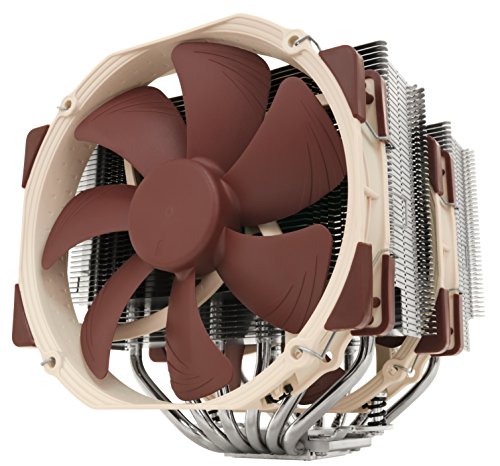
Noctua Dual-Tower 140mm CPU Cooler
Best for: High-performance cooling in spacious cases
- Socket Compatibility
- LGA1851/1700/1200/115x, AM4, AM5
- Cooler Height
- 168mm
- Heat Pipes
- 6
- Tower Design
- Dual-Tower
- Fan Size
- 140mm
- Dimensions
- 6.34 × 5.91 × 6.5 inches
View on Amazon: Noctua Dual-Tower 140mm CPU Cooler Affiliate link
The Noctua NH-D15 is a high-performance dual-tower air cooler designed for demanding builds. It uses two 140mm fans and six heat pipes to manage heat efficiently. This model supports major Intel and AMD sockets, including LGA1700 and AM5. It includes NT-H1 thermal paste and a secure mounting system. You should choose this if you need strong cooling for overclocking or quiet operation.
Pros
- Dual-tower design with six heat pipes
- Two 140mm NF-A15 fans with PWM support
- Includes NT-H1 thermal paste and SecuFirm2 mounting system
- Compatible with LGA1851, LGA1700, and AM5 sockets
- Backed by a 6-year manufacturer warranty
Cons
- Heavier build at 2.87 pounds
- Larger dimensions requiring more case space
- No mention of software control or RGB lighting
Good fit if
- You need top-tier cooling for high-end CPUs
- You prioritize quiet operation with 140mm fans
- You use Intel LGA1700 or AMD AM5 platforms
Skip if
- You have a small form factor case
- You need RGB lighting effects
- You prefer a single-tower compact design
Verdict: Noctua NH-D15 Dual Tower 140mm delivers class-leading performance for overclocking and silent systems. It fits users with spacious cases who want reliable cooling for high-wattage processors.
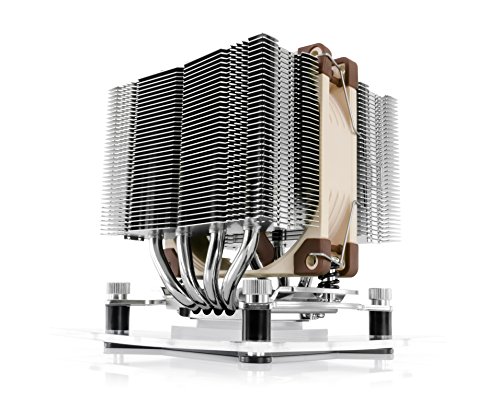
Noctua NH-D9L 92mm Dual Tower Cooler
Best for: ITX and small form factor builds
- Cooler Height
- 110mm
- Tower Design
- Dual-Tower
- Fan Size
- 92mm
- Dimensions
- 3.74 × 3.74 × 4.33 inches
- Weight
- 1.17 pounds
View on Amazon: Noctua NH-D9L 92mm Dual Tower Cooler Affiliate link
The Noctua NH-D9L is a 92mm dual-tower air cooler designed for small form factor builds. It stands 110mm tall, fitting easily into ITX cases and HTPC enclosures without blocking RAM or PCIe slots. The cooler uses a 92mm NF-A9 fan with PWM support for quiet operation. It includes NT-H1 thermal paste and a SecuFirm2 mounting system for Intel and AMD sockets. This model prioritizes compactness and compatibility over maximum cooling capacity.
Pros
- Compact 110mm height fits ITX and small factor cases
- Dual-tower design maintains good cooling in tight spaces
- NF-A9 92mm fan includes low noise adapter for quiet operation
- Includes NT-H1 thermal paste and SecuFirm2 mounting hardware
Cons
- Smaller 92mm fans limit peak cooling performance compared to 120mm or 140mm models
- Brown color option may not match all case aesthetics
- Single fan configuration offers less airflow than dual-fan setups
Good fit if
- You are building an ITX or small form factor PC
- You need a cooler that does not block RAM slots
- You prioritize quiet operation in a compact chassis
Skip if
- You require maximum cooling performance for high-end CPUs
- You are using a standard ATX or larger case
- You prefer 120mm or 140mm fans for better airflow
Verdict: Noctua NH-D9L Compact Dual Tower is ideal for users who need a reliable cooler for small cases without sacrificing too much performance. It fits perfectly in tight spaces where larger coolers cannot go.
Specifications side by side
| Spec | Noctua Dual-Tower 140mm CPU Cooler | Noctua NH-D9L 92mm Dual Tower Cooler |
|---|---|---|
| Socket Compatibility | LGA1851/1700/1200/115x, AM4, AM5 | not stated |
| Cooler Height | 168mm | 110mm |
| Heat Pipes | 6 | not stated |
| Tower Design | Dual-Tower | Dual-Tower |
| Fan Size | 140mm | 92mm |
| Dimensions | 6.34 × 5.91 × 6.5 inches | 3.74 × 3.74 × 4.33 inches |
| Weight | 2.87 pounds | 1.17 pounds |
| Color | Brown | brown |
| Model | NH-D15 | NH-D9L |
Frequently asked questions
Does the Noctua Dual-Tower 140mm CPU Cooler fit in standard mid-tower cases?
It fits most mid-tower and full-tower cases, provided you have adequate clearance. The NH-D15 measures 6.5 inches tall and 6.34 inches long. You must check your case specifications to ensure it can accommodate this height and length without interfering with RAM or side panels.
Is the Noctua NH-D9L suitable for ITX builds?
Yes, it is designed for small form factor builds. The NH-D9L measures 4.33 inches tall and 3.74 inches wide. Its compact dual-tower design allows it to fit in tight spaces where larger coolers cannot go, making it ideal for ITX motherboards with limited clearance.
What is the weight difference between the two coolers?
The NH-D15 weighs 2.87 pounds, while the NH-D9L weighs 1.17 pounds. The larger dual-tower model is significantly heavier due to its size and additional heatsink mass. Ensure your motherboard socket can support the weight of the NH-D15 to prevent sagging over time.
Do both coolers include thermal paste?
Yes, both models include NT-H1 thermal paste. This paste helps transfer heat efficiently from the CPU to the cooler base. You do not need to purchase separate thermal compound unless you prefer a different brand or formulation for your specific build requirements.
Which cooler is better for high-wattage processors?
The Noctua Dual-Tower 140mm CPU Cooler is better for high-wattage processors. Its dual 140mm fans and larger heatsink surface area provide superior cooling performance. This makes it suitable for overclocking or running power-hungry CPUs that generate significant heat under load.
How tall is the Noctua NH-D9L compared to the NH-D15?
The NH-D9L is 4.33 inches tall, whereas the NH-D15 is 6.5 inches tall. The NH-D9L is significantly shorter, allowing it to fit in cases with lower RAM clearance or smaller dimensions. The NH-D15 requires more vertical space to function effectively.
Do both models use a dual-tower design?
Yes, both the NH-D15 and NH-D9L feature a dual-tower design. This architecture uses two heatsink stacks to maximize surface area for heat dissipation. The NH-D15 uses two 140mm fans, while the NH-D9L uses a single 92mm fan, but both share this core structural approach.